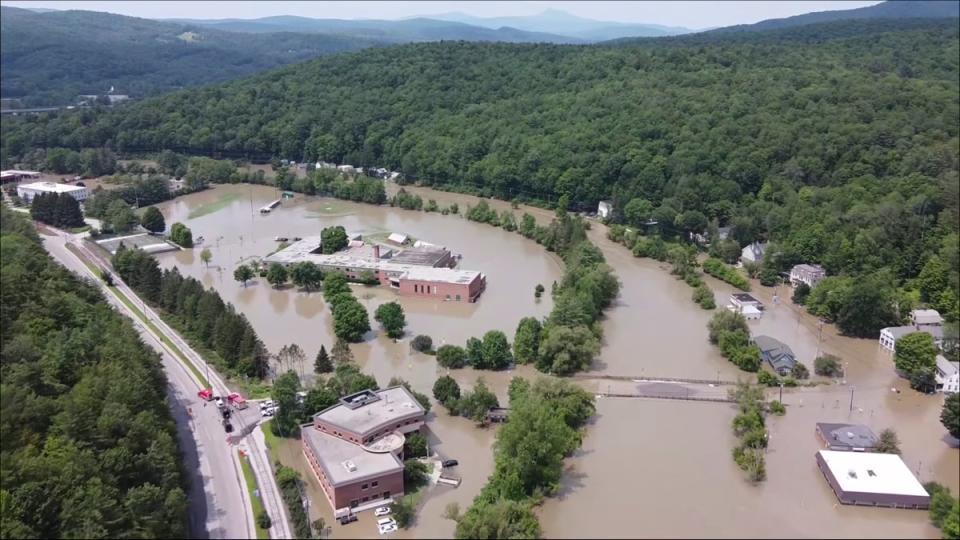
The recent historic flooding in Vermont has had a significant impact on the local wildlife, particularly fish and beavers. Trout species such as brook, rainbow, and brown have been observed moving upriver during increased water flow, seeking refuge in less turbulent areas like tributaries, flooded fields, or behind natural structures. While smaller floods typically do not displace fish significantly, studies show that larger events like Hurricane Irene can cause a population decline of up to 50%. However, the resilience of fish populations allows for quick recovery as they can recolonize and find refuge in less affected headwaters and smaller streams. In addition to fish, other wildlife such as skunks, muskrats, and weasels have also been displaced. Furthermore, the flooding has resulted in beavers being hit by cars on the roads, as their dams were unable to withstand the excessive water. Despite these challenges, experts predict that the wildlife populations, including beavers, will bounce back in due time.
Vermont’s Fish and Wildlife Impact:
The flooding in Vermont has had a significant impact on fish populations, primarily species of trout including brook, rainbow, and brown trout. During periods of increased water flow, these fish have been observed moving upriver to find less turbulent areas for refuge. They seek shelter in tributaries, flooded fields, or behind fallen trees and rocks. While smaller floods typically do not displace fish significantly, the aftermath of Hurricane Irene saw some fish populations decline by up to 50%. However, the positive aspect is that fish populations can recover relatively quickly. The preservation of headwaters and the establishment of connectivity between streams and systems play a crucial role in aiding their recovery.
Displaced Wildlife:
Apart from fish, other wildlife species have also been affected by the flooding. Reports indicate that skunks, muskrats, and weasels were likely displaced from their habitats along the banks of the Winooski River and its tributaries. These animals had sought shelter in nesting areas that were flooded during the extreme weather event. The displacement of wildlife during such flooding is not uncommon.
Beavers and Their Dams:
One distressing sight observed in the aftermath of the flooding was the unfortunate deaths of beavers that were hit by cars on the roads. Beavers play a vital role in creating habitats and slowing down flooding through their dam-building activities. However, when facing a catastrophic flood like the recent one, it is unlikely that beaver dams can withstand the excessive water volume. In normal thunderstorm-type flooding, beaver dams serve as effective barriers and even enhance water capture and release into wetland areas. Despite potential casualties and temporary displacement, beavers are resilient creatures, capable of rebuilding their habitats. These resourceful animals will naturally return to suitable sites in their wetland habitats, where they can find ample food sources such as young trees like willows, alders, and maples.
Wildlife Resilience:
While flooding events can temporarily disrupt wildlife habitats, Vermont’s wildlife populations, including bears, deer, and turkeys, tend to adapt by moving to higher ground until conditions improve. It is worth noting that the state’s wildlife populations are generally healthy, abundant, and sustainable. This resilience allows for populations to rebound and recover from such natural challenges.
The historic flooding in Vermont has had a significant impact on wildlife, with fish, beavers, and other species being temporarily displaced or facing casualties. While fish populations may decline during major floods, they have the ability to recover quickly, thanks to their resilience and the preservation of suitable habitats. Similarly, beavers, known for their dam-building activities, may face temporary displacement, but they are expected to rebuild their habitats naturally. Vermont’s wildlife populations, including bears, deer, turkeys, and others, have demonstrated their ability to bounce back after flooding events. It is essential to continue preserving and protecting their habitats to ensure their long-term sustainability.
Note: The provided article excerpt about supporting The Guardian has been excluded from the rewritten content as it is not relevant to the topic of Vermont wildlife and flooding.