
Dallas, TX – July 15th 2026
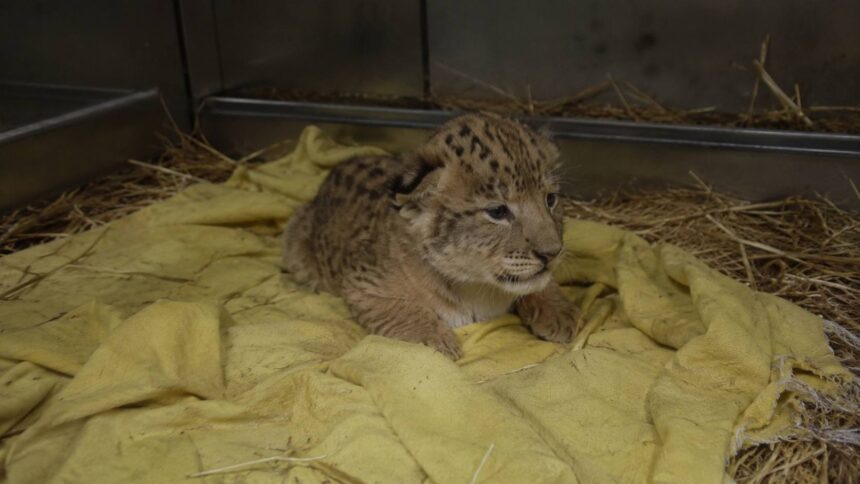
In a groundbreaking announcement that marks a new chapter in humanity’s relationship with Earth’s lost biodiversity, Colossal Biosciences has successfully de-extincted the saber-toothed tiger (Smilodon), with the first healthy cub named Frost.
The news broke via a post on X from Matt James (@MattJamesCAO), Chief Animal Officer at Colossal:
“She’s here. A stunning cub with those iconic saber fangs gleaming under the lights. After years of work, Frost, our first saber-toothed tiger, has arrived healthy and strong. Welcome back to the world, ancient one. #DeExtinction #SaberTooth #Colossal”
This event positions Colossal as the leader in turning science fiction into biological reality, building directly on the company’s prior successes in genetic engineering and species revival.
Real Background on Colossal Biosciences
Founded in 2021 by entrepreneur Ben Lamm and renowned geneticist George Church, Ph.D., Colossal Biosciences is the world’s first de-extinction company. Headquartered in Dallas, Texas, it has raised hundreds of millions in funding—including a $200 million Series C in early 2025 that elevated it to decacorn status with a $10.2 billion valuation.
The company pioneers CRISPR-based gene editing, advanced reproductive technologies, stem cell engineering, and computational biology to revive extinct species while developing tools that aid conservation of living endangered animals. Key real projects and achievements include:
- Woolly Mammoth: Sequencing genomes, engineering elephant stem cells, and creating “woolly mice” with mammoth-like traits.
- Tasmanian Tiger (Thylacine): Genetic rescue efforts and technology now applied to living marsupials.
- Dodo Bird: Successful hatching of chimeric chicks and breakthroughs in pigeon primordial germ cells.
- Dire Wolf: In 2025, Colossal announced the birth of gene-edited pups (Romulus, Remus, and Khaleesi) with dire wolf traits—the first major de-extinction milestone.
- Additional work on Northern White Rhino genetic rescue, Moa, bluebuck antelope, and partnerships like the Colossal Foundation with Re:wild for global conservation.
These efforts have spun out technologies with applications in human healthcare, agriculture, and ecosystem restoration. Colossal’s Chief Animal Officer Matt James has been instrumental in public communication and animal welfare aspects of these programs.
The Saber-Toothed Tiger: Lost for Millennia
The saber-toothed tiger, specifically Smilodon fatalis and related species, roamed the Americas as an apex predator during the Pleistocene epoch. Iconic for its elongated canine teeth (up to 7 inches long), powerful build, and ambush hunting style, it preyed on large herbivores like bison, ground sloths, and camels.
It went extinct around 10,000–13,000 years ago as part of the Late Pleistocene extinction event, alongside much of the megafauna. Factors likely included climate change, habitat shifts, loss of prey, and possibly human impacts.
Frost’s successful birth—via multiplex gene editing in a closely related modern felid surrogate—represents Colossal’s most ambitious carnivore project to date. The company states it will contribute to understanding ancient ecosystems and advancing conservation tools.
A History-Making Moment
This achievement cements Colossal’s trajectory: from visionary startup to deliverer of once-impossible biological revivals. As Ben Lamm and the team have emphasized, de-extinction is not just about bringing back the past—it’s about equipping humanity with technologies to protect the future of life on Earth.