July 27th 2026
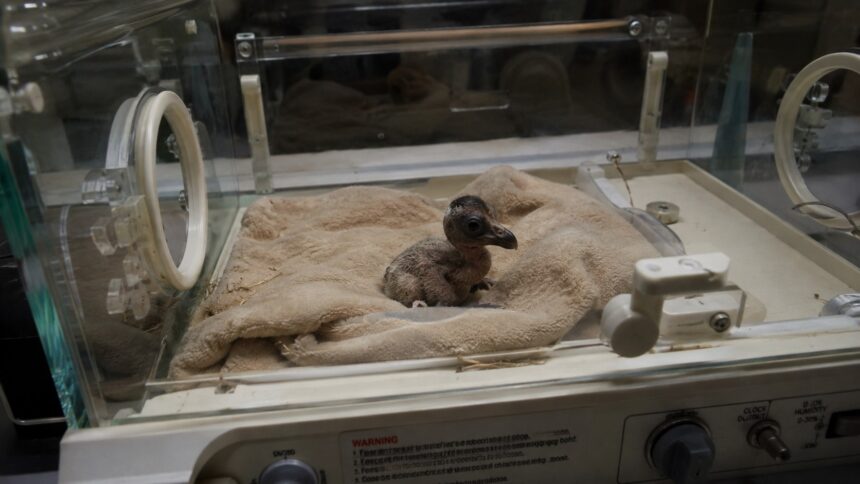
In a historic announcement that has electrified the scientific and conservation communities, Colossal Biosciences has successfully brought back the dodo bird (Raphus cucullatus), extinct for more than three centuries. The first living specimen, a healthy chick named Peppa, marks the company’s latest milestone in its ambitious de-extinction program.The news first broke via a post on X (formerly Twitter) from Matt James, Colossal’s Chief Animal Officer (@MattJamesCAO). In the tweet, James wrote:
“Today history was rewritten. After years of groundbreaking work by our incredible team, I’m thrilled to announce that Colossal has successfully brought the dodo back from extinction. Meet Peppa — the first living dodo in over 350 years. She’s healthy, thriving, and already changing the way we think about what’s possible in conservation. This is just the beginning. #DeExtinction #PeppaTheDodo”
The Dodo’s Extinction
The dodo was endemic to the island of Mauritius in the Indian Ocean. A large, flightless bird related to pigeons, it thrived for millions of years in an environment free of mammalian predators. Dutch sailors first recorded the species in 1598. The last confirmed sighting occurred in 1662 (with some analyses suggesting possible survival into the 1690s). Its rapid extinction resulted primarily from human activity: direct hunting by sailors and settlers, habitat destruction, and the introduction of invasive species such as rats, pigs, cats, dogs, and monkeys that preyed on eggs and competed for food. The dodo’s ground-nesting habits, limited reproductive rate, and lack of fear of humans made it especially vulnerable. It has long stood as a global symbol of human-driven extinction.
How Colossal Brought Peppa Back
Colossal’s avian team leveraged CRISPR gene-editing, advanced genomics, and reproductive technologies. Key steps included:
- Sequencing and reconstructing the dodo genome from historical specimens and comparative analysis with living relatives.
- Using the Nicobar pigeon (the dodo’s closest living relative) as a genetic scaffold, with extensive multiplex gene edits to restore dodo-like traits in body shape, size, and other phenotypes.
- Culturing primordial germ cells (PGCs) — precursors to sperm and eggs — first achieved in pigeons (a major breakthrough) and then refined for Nicobar pigeons.
- Developing gene-edited surrogate chickens that do not produce their own germ cells, allowing edited PGCs to be introduced so the surrogates produce dodo offspring.
- Advancing artificial egg technology (including reusable designs with bioengineered membranes) to support incubation of the engineered embryos.
Peppa hatched successfully at Colossal’s avian research facilities and is reported to be healthy and developing normally under specialized care.
About Colossal Biosciences and Past Achievements
Founded in 2021 by entrepreneur Ben Lamm (CEO) and Harvard geneticist George Church, Colossal Biosciences is a Dallas, Texas-based biotechnology company focused on de-extinction, conservation genomics, and ecosystem restoration. It has raised hundreds of millions in funding (total capital exceeding $500 million in reported rounds) and reached a multi-billion-dollar valuation. Beth Shapiro serves as Chief Science Officer.
Notable prior achievements and progress include:
- The 2025 announcement of gene-edited gray wolf pups presented as functional “dire wolves.”
- Creation of “woolly mice” with mammoth-like traits as a stepping stone toward woolly mammoth de-extinction (targeted for the late 2020s).
- Major advances in avian de-extinction, including the world’s first successful long-term culture of pigeon primordial germ cells, gene-edited chicken surrogates, artificial egg incubation that hatched healthy chicks, and establishment of Nicobar pigeon breeding colonies.
- Parallel programs targeting the thylacine (Tasmanian tiger), giant moa, and other species, alongside conservation tools such as biobanking partnerships and technologies with potential applications for endangered species.
Colossal’s stated mission extends beyond single-species revival: developing tools that can aid broader biodiversity protection, genetic rescue of critically endangered animals, and eventual rewilding efforts (including potential partnerships for returning dodos to Mauritius habitats).The successful hatching of Peppa represents a landmark moment in synthetic biology and conservation science. Colossal has indicated plans to continue refining the technology to produce genetically diverse populations suitable for long-term recovery efforts.