
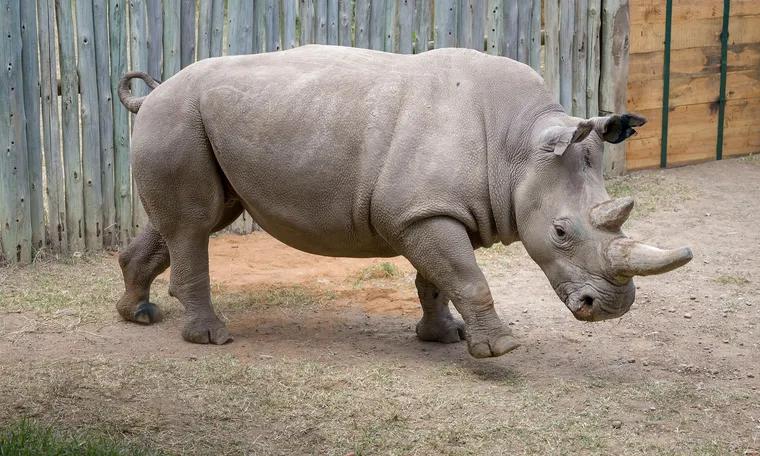
Nanyuki, Kenya – June 5, 2026
It is with profound sadness and heartbreak that Ol Pejeta Conservancy confirms the death of Fatu, one of the only two remaining northern white rhinoceroses on Earth. Peter Esegon, the dedicated longtime caretaker who has watched over Fatu and her mother Najin for years, shared the devastating news via his X (formerly Twitter) account @PeterEsegon, posting: “My heart is broken. Fatu, our gentle girl, has been taken from us. She fought so hard under our constant protection, but poachers have struck again. Najin is now the last white rhino alive. We must protect her with everything we have.”
Fatu, born on June 29, 2000 at Dvůr Králové Zoo in the Czech Republic, was translocated to Ol Pejeta Conservancy in Kenya in 2009 alongside her grandfather Sudan, her uncle Suni, and her mother Najin in hopes that the natural habitat would encourage breeding. She lived under 24-hour armed protection due to the constant threat of poaching driven by the illegal trade in rhino horn. With the death of the last male, Sudan, in March 2018, Najin and Fatu became the final two known northern white rhinos in the world, rendering the subspecies Ceratotherium simum cottoni functionally extinct.
Fatu, who suffered from age-related health issues including difficulties carrying pregnancies, had become a symbol of both loss and scientific hope. She and her mother Najin contributed eggs to the groundbreaking BioRescue consortium’s efforts, which have produced dozens of viable northern white rhino embryos using advanced IVF techniques and preserved sperm from deceased males. Najin is now the last northern white rhino on Earth. At approximately 37 years old, Najin (born 1989) stands completely alone as the sole surviving individual of her subspecies. Like her daughter, she lives under constant armed guard at Ol Pejeta but can no longer carry a pregnancy naturally due to ovarian tumors and other age-related conditions. Scientists continue urgent work to implant embryos into southern white rhino surrogates in a desperate bid to prevent total extinction. This loss is catastrophic.
The northern white rhino’s extinction would represent not only the irreversible loss of a unique genetic lineage that has roamed African grasslands for millions of years, but also a devastating failure in global conservation. Once numbering in the thousands across Central and East Africa, relentless poaching, habitat loss, and conflict have reduced them to this single remaining individual. Najin’s survival now carries the entire genetic future of the subspecies. Her story highlights the urgent need for stronger anti-poaching measures, international cooperation against wildlife trafficking, and investment in cutting-edge technologies like stem-cell derived gametes and surrogacy to rescue species on the brink.
The entire Ol Pejeta team, led by caretakers like Peter Esegon, Zacharia Kipkirui, and others who have formed deep bonds with these gentle giants, mourns Fatu deeply. She was known for her calm demeanor and close relationship with her mother Najin. Ol Pejeta Conservancy and partners including Fauna & Flora, BioRescue, and the Leibniz Institute remain committed to protecting Najin with every resource available and advancing the scientific race to bring northern white rhinos back from the edge of extinction. We call on the global community to support these efforts before it is too late.